
Historical Names

Names are tiny time capsules. A girl called Hatshepsut, Aelfgifu, Temperance or Clementine could only have been born in one corner of history, and choosing a name with that kind of pedigree gives a baby, a novel’s hero or a game character instant depth. This page walks through more than 80 genuine historical names, era by era, with what each one meant to the people who used it.
Use it as a map. Every era below links to a full list: start with ancient names and medieval names, jump forward to Victorian names, or look at how naming habits echo in today’s old names revival.
Historical Names: browse all lists
 Medieval Names80+ names
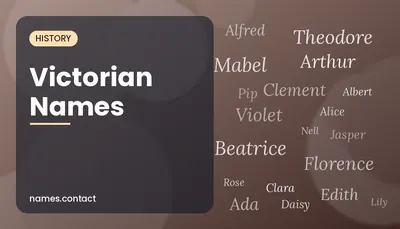 Victorian Names110+ names
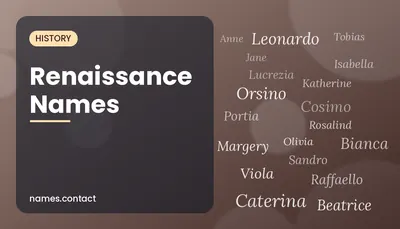 Renaissance Names100+ names
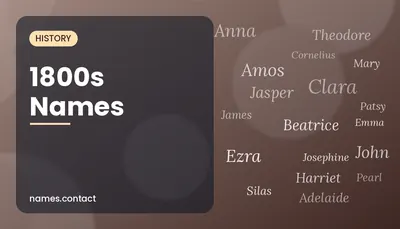 1800s Names110+ names
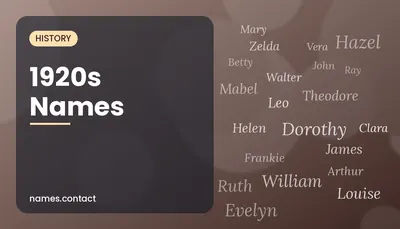 1920s Names100+ names
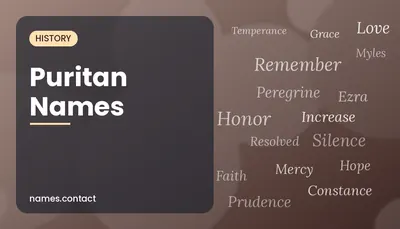 Puritan Names100+ names
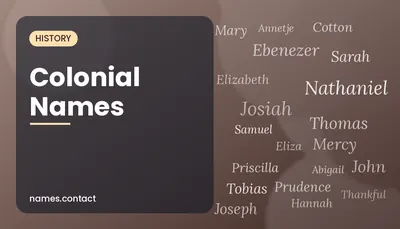 Colonial Names100+ names
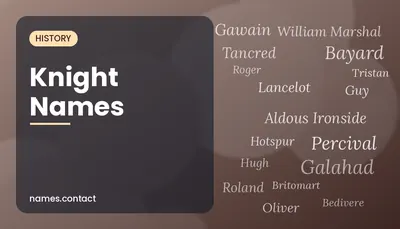 Knight Names100+ names
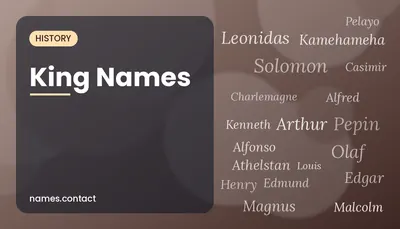 King Names110+ names
 Queen Names100+ names
 Ancient Egyptian Names100+ names
 Samurai Names100+ names
 Spartan Names90+ names
 Gladiator Names100+ names
 Wild West Names110+ names
 Ancient Names100+ names
Ancient Egyptian names
Egyptian names were often little prayers, naming a god and asking for its favor. See our full list of ancient Egyptian names.
| Name | Meaning | Notes |
|---|---|---|
| Hatshepsut | “Foremost of noble women” | Female pharaoh, 15th c. BC |
| Nefertiti | “The beautiful one has come” | Queen of Akhenaten |
| Ramesses | “Ra is the one who bore him” | Ramesses II, the Great |
| Tutankhamun | “Living image of Amun” | Boy king |
| Ahmose | “The moon is born” | Founder of the New Kingdom |
| Merit | “Beloved” | Common woman’s name |
| Imhotep | “The one who comes in peace” | Architect of the Step Pyramid |
| Nefertari | “Beautiful companion” | Great royal wife of Ramesses II |
| Khufu | Short for Khnum-Khufu, “Khnum protects me” | Builder of the Great Pyramid |
Ancient Greek and Roman names
Greek names were built from meaningful parts (“glory,” “horse,” “wisdom”), while Romans used a family system of praenomen, nomen and cognomen. Go deeper with Spartan names or gladiator names.
| Name | Meaning | Origin |
|---|---|---|
| Alexander | “Defender of men” | Greek |
| Leonidas | “Son of the lion” | Greek (Sparta) |
| Sappho | Uncertain, possibly “sapphire” | Greek poet of Lesbos |
| Pericles | “Surrounded by glory” | Greek (Athens) |
| Aspasia | “Welcome, embraced” | Greek |
| Hypatia | “Highest, supreme” | Greek-Egyptian scholar |
| Augustus | “Venerable, majestic” | Roman |
| Julius | Roman family name, possibly “youthful” | Roman |
| Livia | Possibly from lividus, “bluish” | Roman |
| Cornelia | Feminine of the Cornelius clan | Roman |
| Marcus | Possibly from Mars, god of war | Roman |
| Octavia | “Eighth” | Roman |
| Cassius | Possibly “empty, vain” | Roman |
| Agrippina | From the Agrippa family | Roman |
Medieval names (500–1500)
Anglo-Saxon names gave way to Norman French ones after 1066, and saints’ names spread everywhere. Browse medieval girl names, knight names and king names.
| Name | Meaning | Origin |
|---|---|---|
| Aethelred | “Noble counsel” | Anglo-Saxon |
| Aelfgifu | “Elf gift” | Anglo-Saxon |
| Godric | “God’s ruler” | Old English |
| Matilda | “Mighty in battle” | Germanic, via Norman French |
| Eleanor | Possibly from Provençal “Aliénor” | Old French |
| William | “Resolute protector” | Germanic, via Norman French |
| Isolde | Uncertain, possibly Celtic | Arthurian |
| Baldwin | “Bold friend” | Germanic |
| Gunnhild | “Battle-battle” | Old Norse |
| Ragnar | “Warrior of the gods’ counsel” | Old Norse |
| Joan | Feminine of John, “God is gracious” | Hebrew, via French |
| Wat | Medieval short form of Walter | English |
Renaissance and Tudor names (1400–1650)
Classical names came roaring back in Italy while England settled on a tight core of saints’ names. More in Renaissance names and queen names.
| Name | Meaning | Notes |
|---|---|---|
| Leonardo | “Brave lion” | Leonardo da Vinci |
| Lorenzo | “From Laurentum” | Lorenzo de’ Medici |
| Lucrezia | Feminine of the Roman Lucretius | Lucrezia Borgia |
| Beatrice | “She who brings happiness” | Dante’s muse |
| Elizabeth | “My God is an oath” | Elizabeth I |
| Anne | “Grace” | Anne Boleyn |
| Catherine | Greek, possibly “pure” | Three of Henry VIII’s wives |
| Thomas | “Twin” | Thomas More, Thomas Cromwell |
| Isabella | Spanish form of Elizabeth | Isabella of Castile |
| Galileo | “From Galilee” | Galileo Galilei |
Colonial and Puritan names (1600–1800)
Early American families favored Old Testament names and literal “virtue” names. See Puritan names and colonial names.
| Name | Meaning | Notes |
|---|---|---|
| Temperance | Moderation, self-control | Puritan virtue name |
| Patience | Endurance | Puritan virtue name |
| Prudence | Good judgment | Puritan virtue name |
| Remember | Literal virtue name | Remember Allerton, Mayflower |
| Josiah | “God supports” | Hebrew |
| Ebenezer | “Stone of help” | Hebrew, 1 Samuel 7 |
| Abigail | “My father is joy” | Hebrew |
| Mercy | Compassion | Virtue name |
| Increase | Literal; “God’s favor grows” | Increase Mather |
| Hezekiah | “God strengthens” | Hebrew |
| Martha | “Lady” | Aramaic; Martha Washington |
Victorian and 1800s names
Victorians loved flower names, jewel names and revived medieval names. See 1800s names and Wild West names.
| Name | Meaning | Origin |
|---|---|---|
| Clementine | “Merciful” | Latin |
| Florence | “Flourishing” | Latin |
| Ada | “Noble” | Germanic |
| Beatrix | “She who brings joy” | Latin |
| Victoria | “Victory” | Latin |
| Albert | “Noble and bright” | Germanic |
| Silas | “Of the forest” | Latin |
| Jedediah | “Beloved of God” | Hebrew |
| Opal | The gemstone | English |
| Wyatt | “Brave in war” | Old English |
Early 20th-century names
Jazz Age names are back in nurseries now. The full list is on 1920s names.
| Name | Meaning | Origin |
|---|---|---|
| Zelda | Short for Griselda, “grey battle” | Germanic |
| Dorothy | “Gift of God” | Greek |
| Mildred | “Gentle strength” | Old English |
| Hazel | The hazel tree | English |
| Theodore | “Gift of God” | Greek |
| Harold | “Army ruler” | Old English |
| Walter | “Army ruler” | Germanic |
| Frances | “From France” | Latin |
| Edith | “Prosperous in war” | Old English |
| Louise | “Renowned warrior” | Germanic, via French |
| Arthur | Possibly “bear” | Celtic |
Beyond Europe: samurai-era Japan
Japanese warrior families passed down given-name elements like -nobu and -masa. Explore samurai names.
| Name | Meaning | Notes |
|---|---|---|
| Nobunaga | “Trust” + “long” | Oda Nobunaga, unifier |
| Tomoe | “Comma-shaped swirl” | Tomoe Gozen, female warrior |
| Musashi | Province name | Miyamoto Musashi, swordsman |
| Ieyasu | “House” + “peace” | Tokugawa Ieyasu |
How to use historical names
- For writers: check the name existed in your setting’s time and place. Eleanor fits 12th-century France; Brittany does not.
- For babies: look for names that were common then but rare now, like Beatrix, Silas or Josiah. They feel classic without being overused.
- Latin and Greek names travel well because English borrowed so many of them. Try our Latin names and Greek names.
- Pair a historical first name with a modern middle name (or the reverse) to balance character and practicality.
- Remember that some names carry heavy associations: Nero or Attila tell a story before you do.
Frequently asked questions
What are some historical names for girls?
Strong choices include Matilda, Eleanor, Beatrix, Cornelia, Isolde, Temperance and Clementine, each tied to a different era.
What are some historical names for boys?
Popular picks are Augustus, Leonidas, William, Leonardo, Josiah, Silas and Theodore.
What were common names in the Middle Ages?
In England after 1066, John, William, Robert, Richard and Thomas dominated for men, and Alice, Joan, Agnes, Matilda and Isabel for women.
Why did Puritans use names like Patience and Remember?
Puritans wanted names that expressed Christian virtues or pious phrases rather than saints’ names, which they associated with Catholicism.
Are historical names coming back?
Yes. Many 1880s–1920s names, such as Hazel, Theodore, Ada and Silas, have returned to the US top charts in recent years (SSA data).